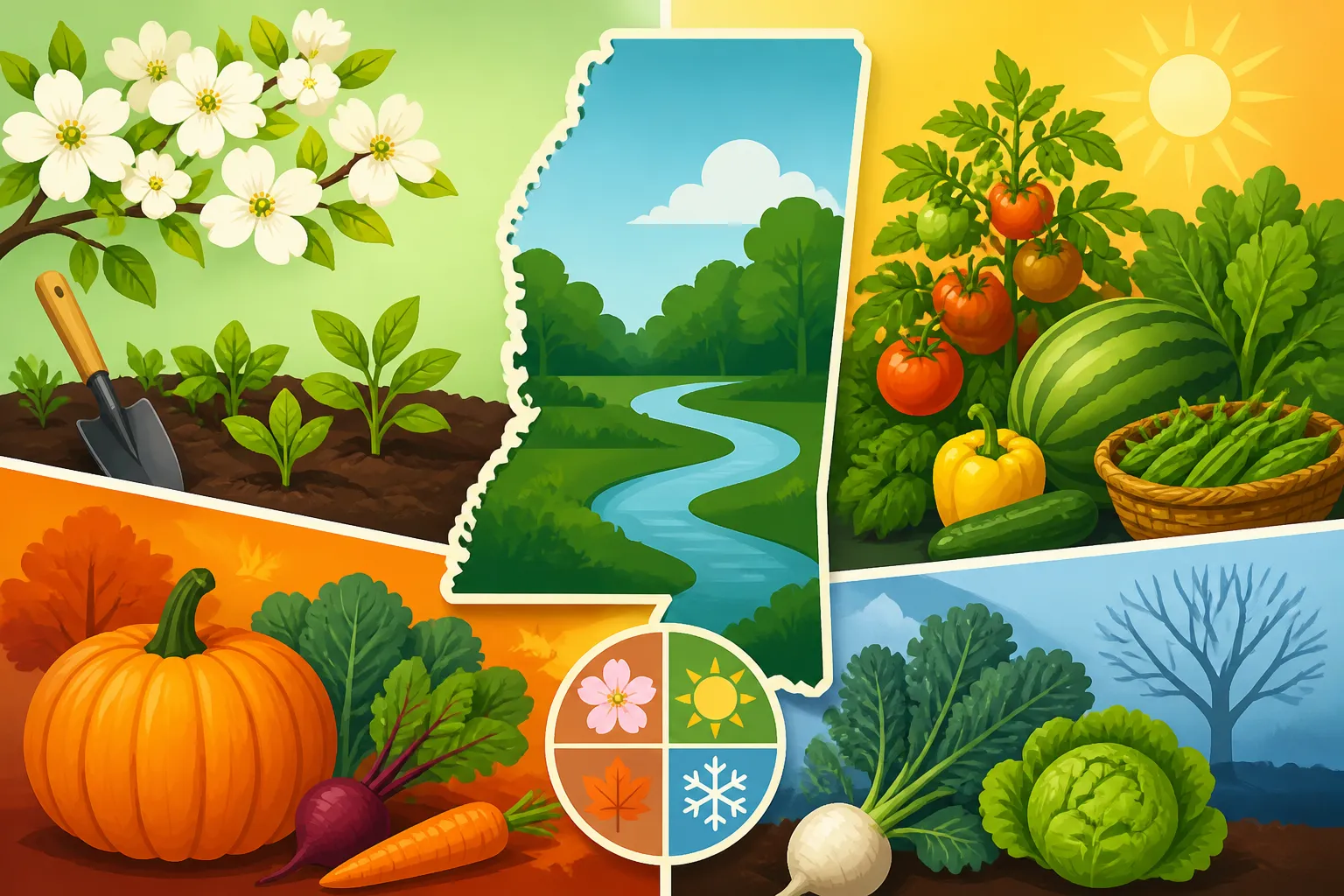
Mississippi Planting Guide: What to Grow by Season and Zone
Mississippi gardeners have a long growing opportunity, but heat, humidity, occasional cold snaps, and regional differences can make it hard to decide what to plant and when. The key is to plan by season and local conditions, not by hardiness zone alone. This guide explains how to choose crops, time sowing and transplanting, and adjust a garden plan across the state.
What Mississippi’s plant hardiness zone tells you
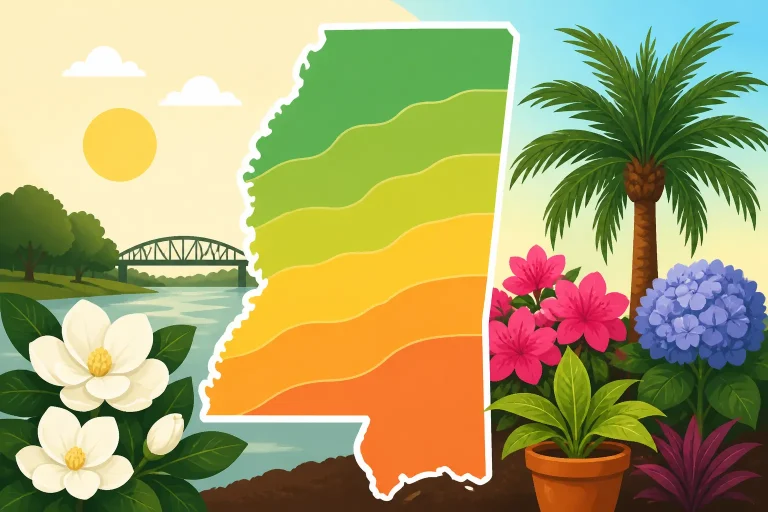
According to Mississippi State University Extension Service, much of Mississippi is in USDA 2023 plant hardiness zone 8b. That information helps gardeners understand the winter cold plants may need to tolerate, especially when choosing perennial vegetables, fruit, herbs, trees, and shrubs. It does not tell you exactly when to sow vegetable seeds or set out seedlings.
A hardiness zone is not a planting calendar. Two gardens within the same zone can have different soil conditions, sun exposure, drainage, and cold-air movement. A low spot may stay colder than a nearby slope, while a sunny, sheltered bed may warm earlier than an open one. These differences matter when a crop is sensitive to a late cold snap or struggles through summer heat.
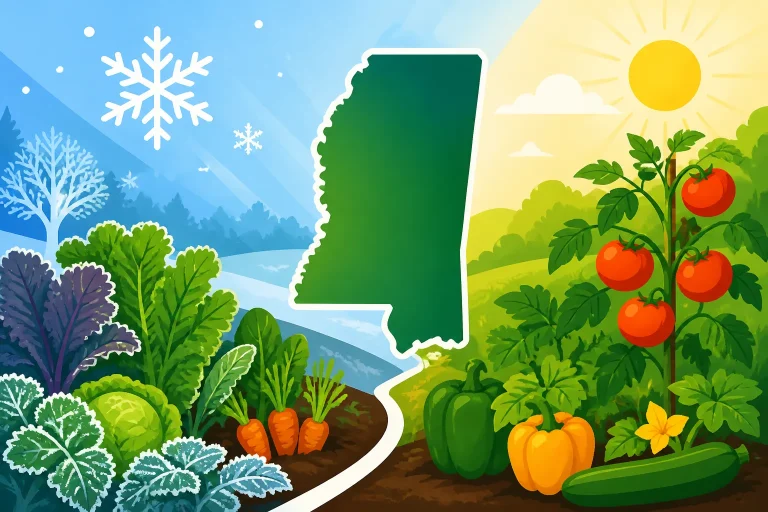
Vegetable timing depends on more than winter minimum temperatures. Cool-season crops generally grow best when conditions are mild. Warm-season crops need warmth to grow well and may stall or suffer when soil and air are too cool. In Mississippi, summer heat can also interrupt growth or fruit production, even when plants are technically adapted to a warm climate.
That is why it helps to use the zone as background information and plan around the conditions in your garden. Think about whether the soil is still cold or wet, whether a warm spell is likely to be followed by a cold night, and how much heat a crop will face as it matures. If you are comparing local zone information, Mississippi Hardiness Zones: Understanding the 7b to 9a Range offers related context. For a closer look at why winter-low information and planting dates are not interchangeable, see How Average Winter Low Temperatures Define Mississippi Hardiness Zones.
The calendar is also flexible. According to Mississippi State University Extension Service, gardeners can grow cool-season and warm-season crops nearly year-round. That does not mean every crop grows well in every month, or that planting can happen regardless of weather. It means there are opportunities to plan different crops for different conditions rather than treating the garden as a once-a-year project.
What to grow through Mississippi’s seasons
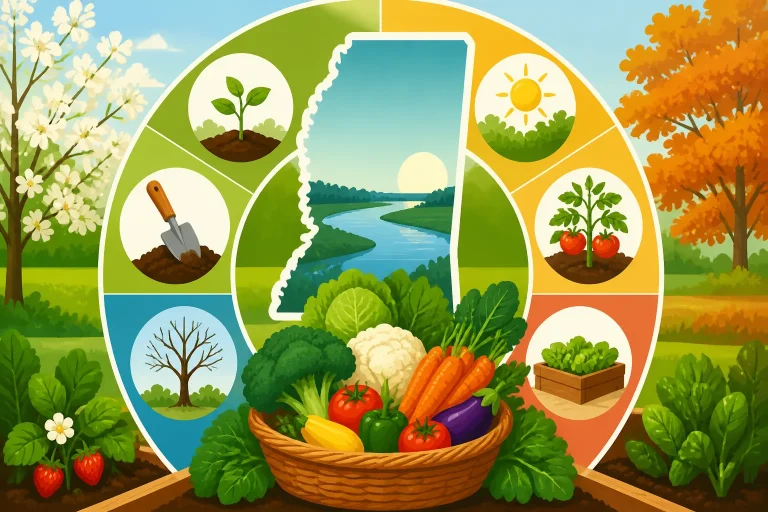
A practical seasonal plan starts with the conditions each crop prefers. Cool-season vegetables make sense when temperatures are mild, while warm-season vegetables generally need warmer soil and air. Some crops fit more than one planting window, but their performance can differ between a spring planting and a fall planting.
| Season or garden condition | Crops to consider | What to watch |
|---|---|---|
| Mild weather and cool soil | Lettuce, broccoli, cabbage, carrots, beets, collards, and turnips | Cold snaps, wet soil, and rising heat as the crop matures |
| Warming weather after cold risk eases | Tomatoes, peppers, cucumbers, beans, squash, and corn | Soil warmth, lingering cold nights, and steady establishment |
| Hot summer conditions | Okra, heat-tolerant vegetables, and herbs suited to warm weather | Drying soil, intense sun, flower or fruit drop, and heat stress |
| Cooling conditions later in the growing season | Broccoli, cabbage, carrots, collards, lettuce, and turnips | Whether a crop has enough favorable growing time before cold weather |
| Protected or container growing | Herbs, leafy greens, compact vegetables, or seedlings being started | Root space, drainage, watering needs, and temperature swings |
The table is a starting point, not a promise that every crop will perform equally well in every part of the state. A crop that appreciates mild weather may struggle if it is planted while the soil is cold and saturated. A warm-season crop can be set back by an early warm spell if cold weather returns. And a crop that establishes well may still need protection or a change of plan when conditions shift.
Cool-season crops
Cool-season vegetables include leafy greens, brassicas, and many root crops. They are often useful for getting a garden started before intense summer weather or for making use of cooler conditions later in the year. Lettuce, broccoli, cabbage, carrots, beets, collards, and turnips are examples gardeners may consider.
These crops are not interchangeable. Some are usually grown for leaves, while others need time to form roots or heads. A leafy crop can sometimes provide a useful harvest even if it does not reach a large size. A heading crop, by contrast, may need a longer stretch of suitable weather to produce the part you intend to eat. Check the seed packet or plant tag for maturity information and compare it with your expected local conditions.
In a spring planting, the main challenge is often getting a crop established while the weather is still suitable. Warm days can arrive quickly, and a crop that is not ready for heat may bolt, turn bitter, or stop producing well. In a fall planting, the challenge can be the opposite: allow enough time for seedlings to grow before conditions become too cold or growth slows.
If lettuce is part of your plan, When to Plant Lettuce in Mississippi: Spring and Fall Sowing covers the crop’s two useful seasonal opportunities. For broader guidance on selecting cool-season crops and fitting them into the year, see When to Plant Cool-Season Vegetables in Mississippi: Spring & Fall.
Warm-season crops
Tomatoes, peppers, cucumbers, beans, squash, corn, and okra are familiar warm-season choices. They generally need warmer conditions than cool-season crops to establish and grow well. Planting too early can leave seedlings exposed to cold soil or chilly nights, even when the afternoon feels pleasant.
A good warm-season planting decision considers the whole forecast and the bed itself. Soil that remains cold, compacted, or wet may be a poor place for tender transplants. A sunny, well-drained bed may warm sooner than a shaded or low-lying area. A short warm spell by itself is not a guarantee that the growing conditions are settled.
Warm-season crops also differ in how they use space and how long they remain productive. A sprawling cucumber or squash plant needs room to spread unless it is trained or supported. A pepper or tomato may occupy a bed for a long stretch, while a fast-growing crop may be replaced more readily. Think about mature plant size and access for harvesting before filling a bed.
Heat is not automatically helpful. Hot, dry conditions can stress plants, and some crops may flower without setting fruit reliably when temperatures become difficult. Shade, consistent soil moisture, and mulch can help manage stress, but they do not make a poorly timed planting immune to heat. For a crop-by-crop calendar, Mississippi Year-Round Vegetable Gardening Calendar by Month can help you compare planting windows with the needs of specific vegetables.
Adjust the plan for your part of Mississippi
A statewide planting guide is useful for choosing a broad seasonal approach, but local conditions should decide the final timing. The Delta, central Mississippi, northern areas, and the coastal region do not have identical weather or growing conditions. Even within the same community, a garden’s exposure and drainage can make its growing season behave differently from a neighbor’s.
Instead of treating regional labels as exact planting dates, use them as a reminder to check local conditions. A northern garden may need to be more cautious about lingering cold. A coastal garden may have different winter and summer patterns from an inland site. In any region, a cold pocket, shaded bed, raised bed, or heat-reflecting wall can change how quickly the soil warms and how much stress plants face.
Check the bed, not just the calendar
Before sowing or transplanting, look at the soil. Soil that is saturated after rain is difficult to work and may not provide good conditions for young roots. If soil clumps heavily or smears when handled, waiting for it to drain can be wiser than rushing to plant. If the ground dries very quickly, especially in a sandy bed or container, plan for closer moisture monitoring.
Sun exposure matters, too. A bed that gets strong afternoon sun can be productive, but it may become stressful for tender greens or newly transplanted seedlings when temperatures rise. A shaded area may protect plants from the harshest heat but can limit growth for crops that need full sun. Observe the bed over the day rather than relying on a rough impression of how sunny it is.
Drainage and soil structure are part of timing. Heavy soil may stay wet and cold longer than loose soil. Sandy soil can warm quickly but lose moisture more rapidly. Raised beds can offer better drainage in some situations, but they can also dry faster than in-ground plots. If the bed is not ready, a delay is often less costly than asking seedlings to establish in unsuitable conditions. Raised Beds vs In-Ground Plots for Poor Mississippi Soils explores how to weigh those options.
Use local freeze information carefully
A frost or freeze date is a planning aid, not a guarantee about what will happen in a particular year. Dates can vary, and a local forecast matters when tender plants are outside. A warm spell does not rule out a return of cold weather, while a brief cold night may affect exposed plants differently from those in a sheltered bed.
Keep a flexible plan for tender transplants. If cold weather is forecast, consider delaying the planting, keeping plants protected, or using an appropriate cover. Covers need to be secured and used in a way that does not damage the plants; remove or adjust them when conditions change. For more detail on interpreting spring risk, see Mississippi Freeze Dates: Planning Around Local Spring Frost and How to Gauge Spring Freeze Risk When Planting Mississippi Seedlings.
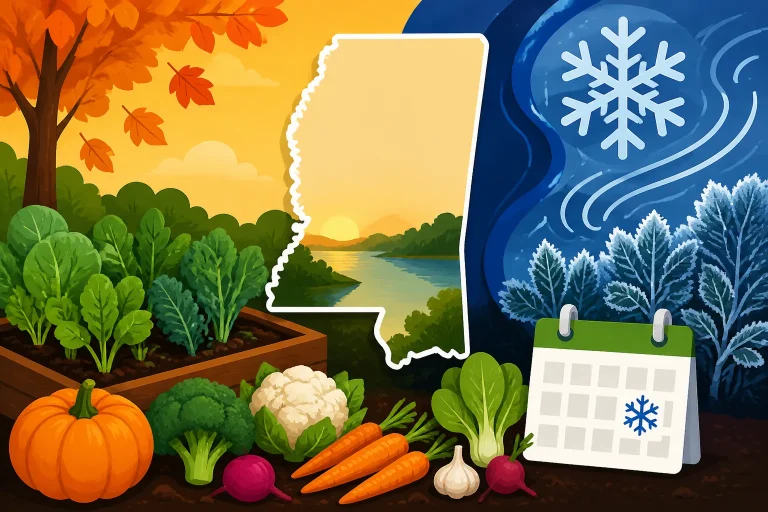
Fall planning also benefits from checking local cold patterns. A crop that takes a long time to mature may not be a good late planting, even if the air still feels warm. Fall Vegetable Planting: Counting Back to Mississippi Freeze Dates explains how to think backward from cold weather when choosing fall crops. The broader Mississippi Planting Guide: What to Grow by Season and Zone is not a separate link here because it is this article’s title; use the seasonal and regional links above for related planning topics.
Decide whether to sow seeds or transplant seedlings
Some vegetables are commonly started directly in the garden, while others are often planted as seedlings. The right approach depends on the crop, the time of year, the condition of the bed, and how much control you want over early growth.
Direct sowing can be convenient for crops that do not respond well to root disturbance or that are easy to establish in place. It also avoids the work of raising seedlings indoors. But seeds need suitable soil moisture and temperature, and young sprouts can be vulnerable to crusting soil, heavy rain, drying, pests, or weeds.
Transplants give a crop a head start and can help fill a bed sooner. They are useful when the outdoor window is short or when it is easier to raise seedlings in a protected spot. The trade-off is that seedlings must be acclimated to outdoor light, wind, and temperature before planting. A plant moved from a sheltered indoor space straight into intense sun may suffer transplant shock even when the outdoor temperature seems comfortable.
When buying transplants, look for sturdy growth and healthy leaves. Avoid plants that appear severely wilted, root-bound, or damaged. A tall, lush seedling is not necessarily a stronger choice than a compact one. If the crop is not ready for the conditions in your garden, keeping a transplant protected for a short time or postponing the planting can be safer than setting it out in a poor site.
A practical planting sequence
- Choose a crop suited to the conditions you expect during its growth, not only the weather on planting day.
- Check whether the bed is drained, workable, and prepared for the crop’s space and light needs.
- Read the seed packet or plant tag for germination, maturity, spacing, and care information.
- Decide whether direct sowing or transplanting is better for that crop and planting window.
- Watch the local forecast, especially when tender seedlings could be exposed to cold or intense heat.
- Water the planting area appropriately and keep checking the soil as seeds germinate or transplants establish.
Those steps are deliberately flexible. A seed packet or nursery tag can provide crop-specific directions, but it cannot account for every garden’s soil and microclimate. Local forecasts and observations help fill in that gap. If you are moving seedlings outdoors, Moving Seedlings Outside: Watching Regional Last Spring Freezes offers more on acclimating plants while keeping cold risk in mind.
If you are starting seeds indoors, make sure the seedlings have adequate light and do not remain in small containers longer than they can support healthy growth. Seedlings that become crowded or stretched may be harder to establish outside. For spring broccoli, Hardening Off Broccoli Seedlings for Mississippi Spring Beds gives a crop-specific example of preparing plants for outdoor conditions.
Build a planting calendar that can change
A useful garden calendar is a working plan, not a rigid list of dates. Start by listing the crops you want to eat, the space available, and the season when each crop is most likely to perform well. Then leave room to adjust when weather, soil, or seedlings do not cooperate.
For each bed, note what is growing now, what can follow it, and how much time the next crop needs. This helps avoid leaving a bed empty longer than necessary, but it also prevents rushed planting. If a spring crop is still healthy and producing, you may not need to pull it simply because another crop is commonly planted at that time. If it is declining in heat or disease pressure, replacing it may make more sense.
Succession planting can spread harvests rather than producing a large amount all at once. Instead of planting every seed of a quick crop on the same day, gardeners can make smaller sowings at intervals suited to the crop and local conditions. The exact interval depends on what you are growing and how fast conditions are changing, so use the seed packet and observe the bed. A succession plan is especially useful for crops you prefer to harvest young and fresh.
Keep basic notes. Record when you sowed or transplanted, how the crop responded, and what happened when the weather changed. Notes can show that one bed warms early, that a shaded spot stays usable longer for greens, or that a crop struggled when it matured during intense heat. These observations become more useful than a generic calendar because they are tied to your garden.
A simple planning table can make adjustments easier:
| Planning note | What to record |
|---|---|
| Crop and bed | What is planted and where |
| Planting method | Direct-sown seed or transplant |
| Bed condition | Drainage, soil texture, sun, and shade |
| Weather response | Cold stress, heat stress, heavy rain, or drying |
| Next step | Continue harvesting, protect, replace, or leave the bed resting |
If you want a month-by-month overview alongside your own notes, Guide to Year-Round Mississippi Vegetable Planting Windows and Mississippi Vegetable Gardening: Seasonal Crops and Timing provide related seasonal planning material. For crops that can be planted more than once, Succession Planting Methods for a Steady Vegetable Supply can help shape a staggered approach.
Avoid common planting-calendar mistakes
Many disappointing gardens are not caused by choosing the wrong crop. They come from treating a calendar date as more important than the plant’s actual conditions. A little flexibility can prevent several common problems.
Planting by zone alone
A zone describes winter cold, not the entire growing environment. It does not tell you whether a bed is waterlogged, when soil has warmed enough for a particular seed, how much afternoon sun a transplant will face, or whether a cold spell is approaching. Use zone information to understand winter suitability, then make vegetable decisions using seasonal conditions and local observation.
Treating an early warm spell as settled weather
A run of mild afternoons can make it tempting to move every seedling outdoors. But young plants may still face cold nights, and warm soil can cool again. Tender crops are especially vulnerable when they have not been acclimated. Look beyond the pleasant afternoon and consider the forecast and the exposure of the planting spot.
Starting fall crops too late
Late summer may still feel like the wrong time to plant cool-season vegetables, but waiting for noticeably cooler weather can leave a crop with too little time to establish. Read the maturity information on the seed packet or tag, then consider how quickly growth may slow as conditions change. A crop started too late may produce leaves without reaching the harvest stage you hoped for.
Expecting every vegetable to thrive in summer
A long warm season does not mean every crop enjoys the hottest part of it. Cool-season crops can become stressed, while some warm-season crops may also struggle during intense heat or dry spells. Choose crops for the conditions they will face as they grow, and pay attention to signs of stress rather than assuming the season alone guarantees success.
Overfilling a bed
Seed packets and plant tags include spacing guidance for a reason. Crowded plants compete for light, water, and nutrients, and dense foliage can make it harder to inspect plants or harvest. Plan for the mature size of each crop, not the small space its seedling occupies. If you want to grow more in limited space, consider vertical supports or compact crops instead of squeezing plants together.
Ignoring soil moisture and drainage
Newly planted seeds and transplants need suitable moisture, but saturated ground can be as problematic as dry soil. A heavy rain may wash seeds away, expose them, or leave roots in poorly aerated soil. Sandy beds and containers may dry out quickly. Check the soil directly and adjust watering to conditions rather than following a fixed schedule that may not suit the weather or bed.
Making changes without checking crop-specific advice
General gardening rules are useful, but each crop has particular needs. Check the seed packet, plant tag, and local gardening guidance for details on sowing depth, spacing, germination, maturity, and disease concerns. For fertilizers, pesticides, and herbicides, follow the product label, which is the legal instruction for use. If a problem is unclear, a local extension office can help identify the issue and suggest suitable next steps.
Frequently Asked Questions
Does a hardiness zone tell me when to plant vegetables?
No. A hardiness zone describes winter cold tolerance, while vegetable planting depends on seasonal temperatures, soil, weather, and the crop’s needs. Use the zone as background information rather than a planting date.
Can Mississippi gardeners grow vegetables in every season?
There are planting opportunities throughout the year, but not every crop suits every season. Choose cool-season or warm-season crops according to the conditions they need, and adjust for local weather.
Should I use seeds or transplants?
It depends on the crop and planting window. Direct sowing works well for some vegetables, while transplants can help crops get established sooner. Follow crop-specific directions and acclimate seedlings before moving them outdoors.
What should I do if the weather changes after planting?
Check the forecast and assess the crop’s exposure. Protect tender plants when appropriate, keep an eye on soil moisture, and be ready to adjust your plan. A flexible calendar is more useful than assuming the original planting date guarantees favorable conditions.
Sources
- Mississippi State University Extension Service — Mississippi Vegetable Gardener's Guide | Mississippi State University Extension Service (checked November 15, 2026)
Disclaimer
This article is for general informational purposes only and does not constitute professional advice. Laws, prices and regulations vary by location and change over time. Consult a qualified professional for guidance on your specific situation. Mississippi Gardening Guide is not a government agency and is not affiliated with any university extension, state department of agriculture or other government agency.