Mississippi Frost-Date Gardening: Timing Cool vs. Warm Crops
Mississippi gardeners have to balance unpredictable cold with a long planting season. A frost-date chart can help, but it cannot tell you whether your soil is warm enough, whether a cold pocket puts your beds at extra risk, or whether a crop can mature before cold returns. The practical answer is to use frost estimates alongside crop needs, local conditions, and the forecast.
What frost dates can—and cannot—tell you
Frost dates are estimates of when freezing conditions may occur, not promises that frost will arrive on a particular day or stay away afterward. They help you judge seasonal risk, but weather varies from year to year. A forecast, the condition of your garden, and the needs of each crop all matter when deciding whether to sow or transplant.
A last spring frost estimate can help you consider when to start tender crops outdoors. A first fall frost estimate can help you decide whether a late sowing has enough time to produce before cold weather becomes a concern. Neither estimate accounts for every garden’s conditions. A low spot, an exposed bed, a nearby building, or a sheltered corner can experience different temperatures from a regional station.
Use frost estimates as a planning aid rather than a planting command:
- For spring, treat the estimated last frost as a point for assessing risk, not as a guarantee of frost-free weather. Tender seedlings may need protection if cold returns.
- For fall, consider both the possibility of early cold and the time your chosen crop needs to grow. A crop that tolerates cool weather may still need a suitable sowing window to mature.
- For any season, check the forecast and soil conditions before acting. A favorable calendar estimate cannot compensate for cold, wet soil or a sudden change in weather.
Local frost estimates are useful when comparing planting windows across Mississippi, but broad statewide guidance may not match a specific yard. For a wider seasonal overview, see Mississippi Planting Guide: What to Grow by Season and Zone. If your main question is how average frost timing affects spring decisions, Mississippi Frost Timing: Planning Spring Sowing and Fall Cutoffs offers a more focused companion topic.
The central distinction is between frost risk and crop suitability. Some crops cope with cool conditions better than others, and some can be started before outdoor conditions are ideal. But a crop’s ability to endure cool air does not mean its seed will germinate well in cold soil, or that a transplant will establish in a wet, chilled bed. Timing works best when you consider the whole growing situation instead of relying on a single date.
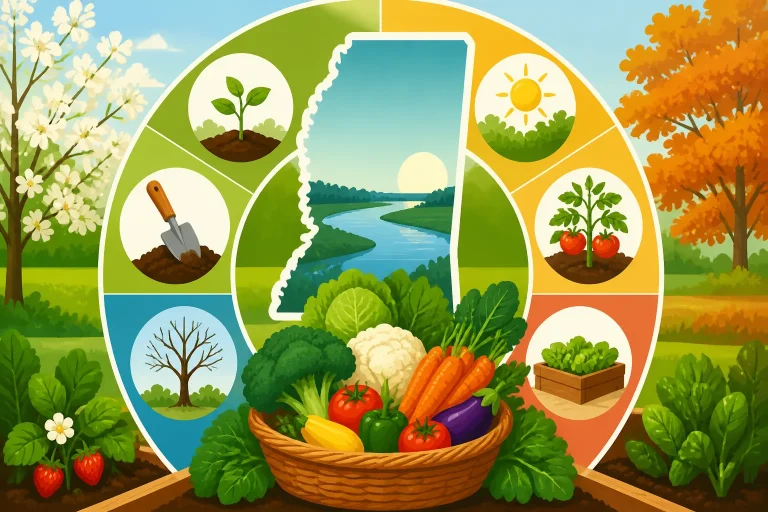
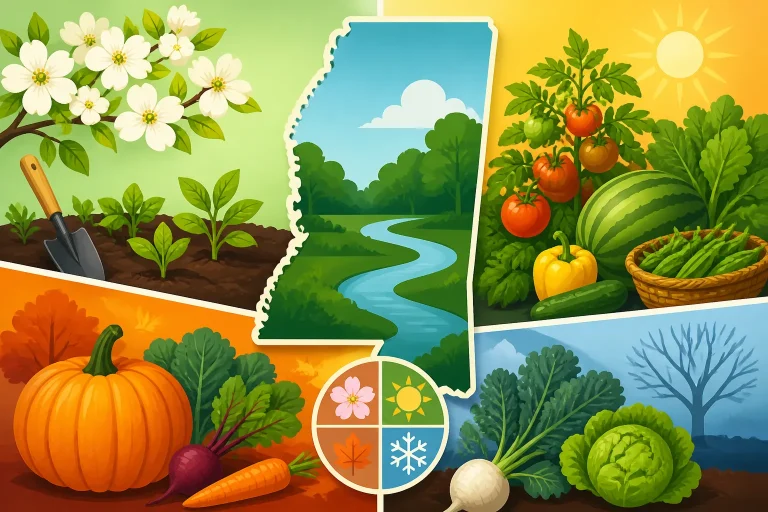
Mississippi State University Extension Service says gardeners can grow cool-season and warm-season crops nearly year-round. That opportunity does not mean every crop belongs in the ground at any time. It means there are multiple planting windows to work with, provided the crop, weather, soil, and available growing time line up.
How to distinguish cool-season and warm-season crops
The terms cool-season and warm-season describe the conditions in which crops generally grow and produce best. They are useful starting points for seasonal planning, but they are not substitutes for checking a crop’s specific needs. Even within one group, crops can differ in their tolerance of frost, heat, and temperature swings.
Cool-season crops are commonly grown when conditions are mild. Examples include lettuce, spinach, peas, carrots, beets, collards, cabbage, broccoli, and other leafy or root vegetables. Depending on the crop and its stage of growth, a cool spell may be manageable, while prolonged warmth can make some crops grow poorly or produce lower-quality harvests. For crop-specific spring and fall windows, see When to Plant Cool-Season Vegetables in Mississippi: Spring & Fall Sowing.
Warm-season crops generally need warmer conditions to grow reliably. Tomatoes, peppers, cucumbers, squash, beans, and okra are familiar examples. Their seeds or roots may struggle in cold soil, and tender plants can be injured by frost. Waiting for conditions to warm can protect establishment, but waiting too long may leave a crop with less time to grow before heat or fall cold becomes a concern.
| Planning question | Cool-season crops | Warm-season crops |
|---|---|---|
| What conditions generally suit them? | Mild weather and conditions that are not excessively hot | Warmer air and soil |
| What are common examples? | Lettuce, spinach, peas, carrots, beets, collards, cabbage, broccoli | Tomatoes, peppers, cucumbers, squash, beans, okra |
| What should you watch for? | Heat that affects growth or harvest quality; cold conditions that slow establishment | Cold soil, late cold snaps, and frost injury |
| What helps guide sowing? | Crop-specific growing needs, soil condition, and the forecast | Soil warmth, frost risk, and the crop’s time to mature |
| What can change the plan? | A sudden warm spell, wet soil, or a sheltered or exposed bed | A cold spell, slow soil warming, or limited time before fall cold |
These categories do not mean that every cool-season crop is frost-proof or that every warm-season crop responds identically to cold. Seedlings can be more vulnerable than established plants, and a crop that survives a chilly night may still be slowed or damaged. The seed packet or a reliable local crop recommendation is a better guide to a particular variety’s needs than the broad category alone.
It also helps to separate germination, establishment, and harvest. Seed can fail to emerge promptly when soil conditions are unsuitable, even if the air feels comfortable. A transplant can be stressed after planting if the bed is cold or waterlogged. And a crop that survives early weather may still need a suitable stretch of growing conditions to reach harvest.
Use the crop group to narrow down the season, then check the individual crop’s instructions. For example, warm-season crops do not all need exactly the same conditions. If you are preparing for a bean planting, How Warm Must Garden Soil Be Before Sowing Bush Lima Beans? can help focus your next step on soil warmth rather than a calendar date.
Planning spring sowing and transplanting
Spring planting involves more than deciding that cold weather is probably over. The bed may remain cool after a mild spell, and a return of cold can set back seedlings or damage tender plants. Consider the crop’s sensitivity, the soil’s condition, and the kind of protection available before moving a plant outdoors.
Start with the crop and its planting method
Direct-sowing and transplanting pose different timing questions. Direct-sown seeds must germinate and establish in the garden soil. A transplant already has leaves and roots, but it can still be stressed by cold, strong wind, or a sudden change in conditions. Check the recommended planting method for the crop rather than assuming that starting it early always gives it an advantage.
Some gardeners start seeds indoors to gain control over early growth. That can be useful when a crop is suited to transplanting, but indoor seedlings need a gradual transition to outdoor conditions. Moving them from a protected space directly into exposed weather can cause stress, even when frost is not forecast. Moving Seedlings Outside: Watching Regional Last Spring Freezes discusses the role of regional cold risk when preparing seedlings for the garden.
Check the bed before planting
A garden can feel warm in the sun while the soil remains cold, damp, or compacted. Before sowing, check whether the bed drains well and whether it is workable without clumping or smearing. If the soil is saturated, waiting for it to drain can be better than working it into a condition that makes planting difficult.
For warm-season crops, soil warmth is especially important. A sunny afternoon does not prove that the root zone has warmed enough for a crop to establish. If you are unsure, a soil thermometer can help you compare the bed with the crop’s recommended range. Follow the seed packet or local growing guidance for the specific crop rather than applying one soil threshold to every vegetable. Checking Soil Warmth Before Sowing Summer Vegetables in Mississippi provides a related look at this decision.
Keep a backup plan for cold snaps
A favorable frost estimate does not rule out a late cold night. If tender plants are already outdoors, prepare for the possibility of protecting them with an appropriate cover or moving portable containers to a sheltered location. Covers should be used in a way that does not injure plants, and they are not a substitute for checking the forecast. For advice focused on protective options, see Emergency Bed Covers: Protecting Mississippi Plants from Freeze.
If cold threatens before planting, holding transplants in a protected place may be safer than putting them into a vulnerable bed. Avoid letting seedlings become severely stressed while waiting, though: they still need appropriate light, moisture, and care. A brief delay can be worthwhile when conditions are poor, but long delays may cause plants to become overgrown or difficult to establish.
For spring planning, do not treat the first warm spell as proof that the season has settled. Look for a pattern: improving soil conditions, a forecast that supports the crop, and a planting window that allows the plant to establish. A flexible plan is more reliable than a rigid list of dates. The related article Choosing Mississippi Spring Sowing Dates to Avoid Late Freezes can help you think through that risk in more detail.
Managing fall planting and the return of cold
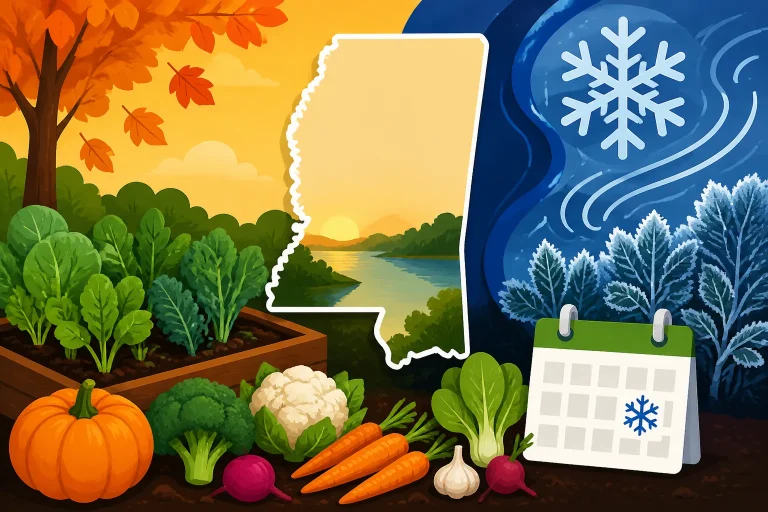
Fall planting reverses the spring problem. Instead of waiting for cold to recede, you are deciding how much growing opportunity remains before cold becomes limiting. The first frost estimate offers a planning reference, but a crop’s maturity time and its ability to tolerate cool conditions are just as important.
Start with the crop’s expected time to maturity, which is usually listed on the seed packet or in crop guidance. That figure is a planning estimate, not a guarantee of harvest on a particular day. Germination may be slower in less favorable conditions, and growth can change as temperatures shift. For a fall sowing, allow for the possibility that the crop will grow more slowly than expected or that weather will interrupt its development.
The phrase “days to maturity” can also be interpreted differently across seed packets. For a direct-sown crop, the estimate may be counted from sowing; for a transplanted crop, it may be counted from transplanting. Check the packet’s wording so you are not planning from the wrong starting point. Estimating Days to Harvest for Mississippi Vegetable Crops covers this useful detail.
Count backward, but leave room for uncertainty
A practical fall plan works backward from the likely arrival of cold. First identify the crop’s estimated time to maturity. Then consider how much time remains before frost risk increases, whether the crop can continue growing in cool weather, and whether you can protect it if conditions turn colder than expected.
Counting backward is a planning tool, not a guarantee. It cannot account for a slow start, a dry spell, heavy rain, pests, or an unusually early cold event. A crop that appears to fit the window on paper may not finish as expected. A crop that is tolerant of cool weather may keep producing after a light frost, while another crop may lose quality or suffer damage. Confirm crop-specific guidance before relying on that distinction.
For practical examples of this backward-planning approach, see Fall Vegetable Planting: Counting Back to Mississippi Freeze Dates. If you are choosing crops that need a longer stretch of favorable weather, Long-Season Fall Crops: Which Mississippi Veggies Need More Time? can help you weigh the available window.
Avoid planting everything at once
A single large sowing can leave a garden with more produce than you can use at one time, or with an uneven harvest if weather delays some plants. Staggering sowings can spread the harvest and reduce the risk of losing an entire planting to a single weather event. The exact spacing between sowings depends on the crop, conditions, and your household’s needs; use crop-specific advice rather than a universal schedule.
Fall beds can also contain crops at different stages. A newly emerged seedling may need different attention from an established plant. Keep track of what you sowed and when, and note whether it was direct-sown or transplanted. Those notes help you understand what worked in your own yard and adjust future fall plans without assuming that one season’s outcome will repeat exactly.
Cold protection can extend the useful season for some plantings, but it does not make every crop suitable for late sowing. A cover may reduce exposure during a cold event, yet plants still need light, healthy soil, and enough time to grow. How to Protect Fall Vegetables from Sudden Mississippi Freezes is a useful companion when frost protection is part of your plan.
Adapt the plan to your garden and local conditions
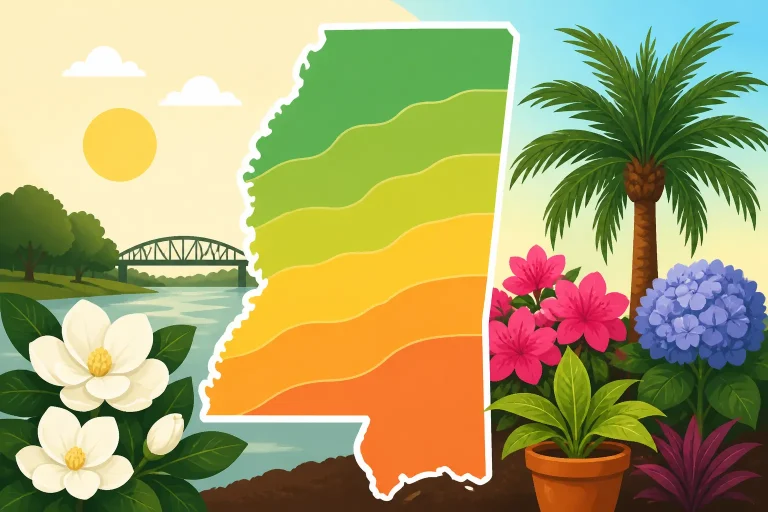
A statewide planting calendar is a starting point. The conditions in a specific yard can shift the practical planting window, even when two gardens are in the same general area. Rather than searching for a perfect date, look for the factors that make your own bed warmer, colder, wetter, or more exposed.
Notice cold pockets and sheltered spots
Cold air can settle in low areas, while a site beside a wall or other structure may stay more sheltered. A garden open to wind can cool differently from one with some protection. These differences do not guarantee that a sheltered bed will avoid frost, but they can help explain why one planting survives while another nearby is damaged.
Pay attention to where frost or cold injury appears after a chilly night. If one bed is repeatedly affected while another remains less exposed, use that observation when choosing where to plant tender crops. Keep expectations modest: local patterns can help with planning, but they do not replace the forecast.
Match crops to the bed, not only the season
A sunny, well-drained bed may warm earlier than a shaded or poorly drained one. Raised beds can also differ from in-ground plots in how quickly they warm and dry. These features matter for both spring establishment and fall growth. If your soil stays wet, planting into it may be a poor choice even when temperatures seem favorable.
For a bed that warms slowly, consider crops that are suited to the current conditions rather than trying to force a tender crop into the ground. In a warmer, sheltered spot, you may have more flexibility, but a sudden cold event can still threaten sensitive plants. The best planting area is not necessarily the warmest spot for every crop; drainage, sunlight, access to water, and the crop’s preferred growing conditions all need to fit.
Keep useful records
A simple garden record can make frost-date planning more accurate over time. Note when you sowed or transplanted, how the weather behaved, where plants were located, and how they responded. Record whether a crop emerged well, stalled after planting, or produced before cold became a problem. Those observations are more useful than relying on memory alone.
Avoid treating a successful early planting as proof that the same timing will be safe next season. Weather changes, and small differences in soil moisture or a cold front can affect the outcome. Use your notes to refine a flexible window, not to create a new fixed date.
If you garden across different parts of Mississippi or are comparing regional recommendations, use resources that address those areas rather than applying one local experience statewide. Vegetable Planting Windows Across Mississippi’s Five Areas provides a regional perspective, while Mississippi Year-Round Vegetable Gardening Calendar by Month can help organize crops across the seasons.
A practical decision process for each planting
When you are ready to plant, make the decision crop by crop. A general “plant now” signal can hide important differences between tender transplants, direct-sown roots, and crops that prefer mild conditions. This process helps combine frost estimates with the details that determine whether a planting is likely to establish.
- Identify the crop and planting method. Check whether the crop is being direct-sown or transplanted, and find its guidance for temperature, light, moisture, and maturity.
- Classify the seasonal fit. Decide whether the crop generally favors cool or warm conditions. Treat that as a starting point, not a complete measure of its frost tolerance.
- Review the local frost outlook. Use the relevant spring or fall estimate to understand the season’s general risk. Remember that it is a probability-based planning reference, not a promise.
- Check the forecast. Look for an approaching cold event or a stretch of weather that may disrupt establishment. Recheck before sowing or moving tender plants outdoors.
- Assess the soil. Consider whether the bed is workable, drains well, and is warm enough for the crop. For temperature-sensitive crops, use a soil thermometer and crop-specific recommendations.
- Consider the site. Account for shade, wind exposure, low spots, and shelter. A regional estimate cannot describe every bed in your yard.
- Choose a response. Plant, wait, use a protected location, or select a crop better suited to the conditions. Do not plant simply because a calendar suggests the season has begun.
- Review the result. Record what happened and use it to improve the next decision, while remembering that weather can vary between seasons.
This process is useful when the signals conflict. For example, the seasonal estimate may suggest that spring planting is reasonable, but the soil may still be too cold or wet. In that case, the soil condition should influence the decision. In fall, the forecast may look mild, but a crop may not have enough time to mature. A comfortable forecast alone does not create a suitable growing window.
It is also reasonable to divide the garden into risk levels. Put the most cold-sensitive plants in a place where they can be monitored or protected, and use more exposed beds for crops that are better suited to current conditions. This does not eliminate weather risk, but it can prevent one planting decision from putting every crop at the same level of exposure.
Keep seed packets and crop notes accessible. They can remind you how the maturity estimate is defined and whether a crop is recommended for direct sowing or transplanting. If the packet and a general calendar seem to conflict, rely on the crop’s specific requirements and seek local guidance for conditions the packet does not explain.
Common frost-date mistakes and how to avoid them
Treating an average estimate as a safe cutoff
A date associated with frost risk is not a guarantee of safety before or after it. Planting tender crops immediately after an estimated last frost can still expose them to a later cold event. Waiting for a frost estimate to pass also does not ensure that the soil is ready for warm-season crops. Make the decision with the forecast, soil, and crop in view.
Assuming every vegetable tolerates frost equally
“Cool-season” does not mean “immune to frost,” and “warm-season” does not mean every plant is affected in precisely the same way. Crop, variety, stage of growth, duration of cold, and site conditions all influence the result. Check crop-specific advice, especially when the planting is valuable or difficult to replace.
Confusing warm air with warm soil
Air temperatures can change quickly, while soil may take longer to warm. A bright day can tempt gardeners to sow seeds or set out transplants before the bed is ready. Check soil conditions directly when warmth is important, and do not treat one pleasant afternoon as proof of a stable planting window.
Ignoring moisture and drainage
Cold, wet soil can slow establishment and make a bed difficult to work. Planting into saturated ground because a frost estimate looks favorable can create problems unrelated to frost. Wait until soil is workable and follow crop-specific advice for moisture needs.
Starting fall crops too late
A crop’s frost tolerance does not necessarily mean it can be planted at any point before cold weather. It still needs suitable conditions and enough time to grow. Check the crop’s maturity information, allow for variable growth, and choose a planting window that leaves room for weather delays.
Moving indoor seedlings outside abruptly
Seedlings raised in a protected environment may not be ready for outdoor conditions. Give them time to adjust gradually and watch the forecast during the transition. The goal is not only to avoid frost; it is also to help plants handle changes in light, wind, and temperature.
Following a calendar without adapting it
A calendar is useful for organizing possibilities, but a static date cannot reflect every local microclimate or seasonal shift. Use calendars to identify what might be suitable, then assess the conditions in your garden. For an additional view of adjusting sowing dates to location and seasonal conditions, see How to Pick Sowing Dates Using Mississippi’s Regional Zones.
Frequently Asked Questions
Are frost dates exact planting dates?
No. They are estimates that help describe seasonal risk, and conditions vary from year to year. Use them with the forecast, soil conditions, and the needs of the crop you plan to grow.
Can a cool-season crop still be damaged by frost?
Yes. Cool-season crops are generally suited to milder conditions, but their tolerance differs by crop, growth stage, and weather. Check crop-specific guidance rather than assuming every cool-season vegetable can withstand frost.
Why wait to plant warm-season vegetables if spring feels warm?
Warm air does not necessarily mean the soil is ready. Cold soil can make it difficult for some warm-season seeds or transplants to establish. Check the crop’s recommended conditions and assess the bed before planting.
What should I do if a late frost is forecast after planting?
Check the forecast and the crop’s sensitivity, then decide whether to protect the plants, move containers to shelter, or wait to plant tender crops. Follow reliable guidance for any covering method and avoid assuming that protection removes all risk.
Sources
- Mississippi State University Extension Service — Mississippi Vegetable Gardener's Guide | Mississippi State University Extension Service (checked November 15, 2026)
Disclaimer
This article is for general informational purposes only and does not constitute professional advice. Laws, prices and regulations vary by location and change over time. Consult a qualified professional for guidance on your specific situation. Mississippi Gardening Guide is not a government agency and is not affiliated with any university extension, state department of agriculture or other government agency.