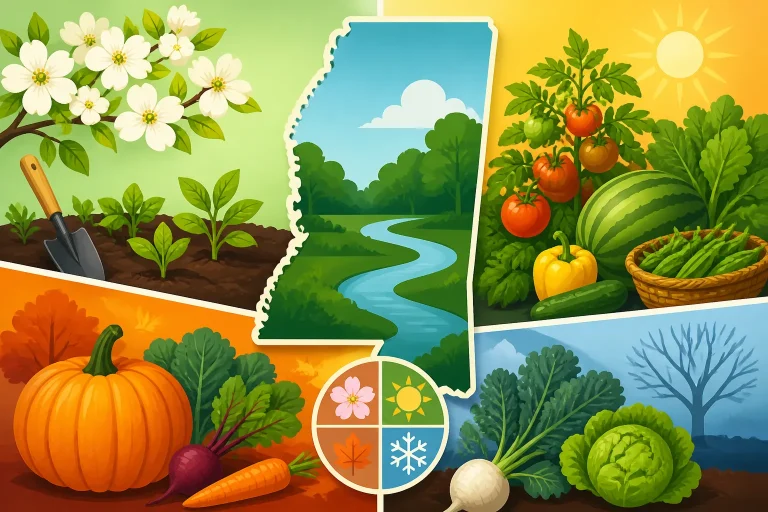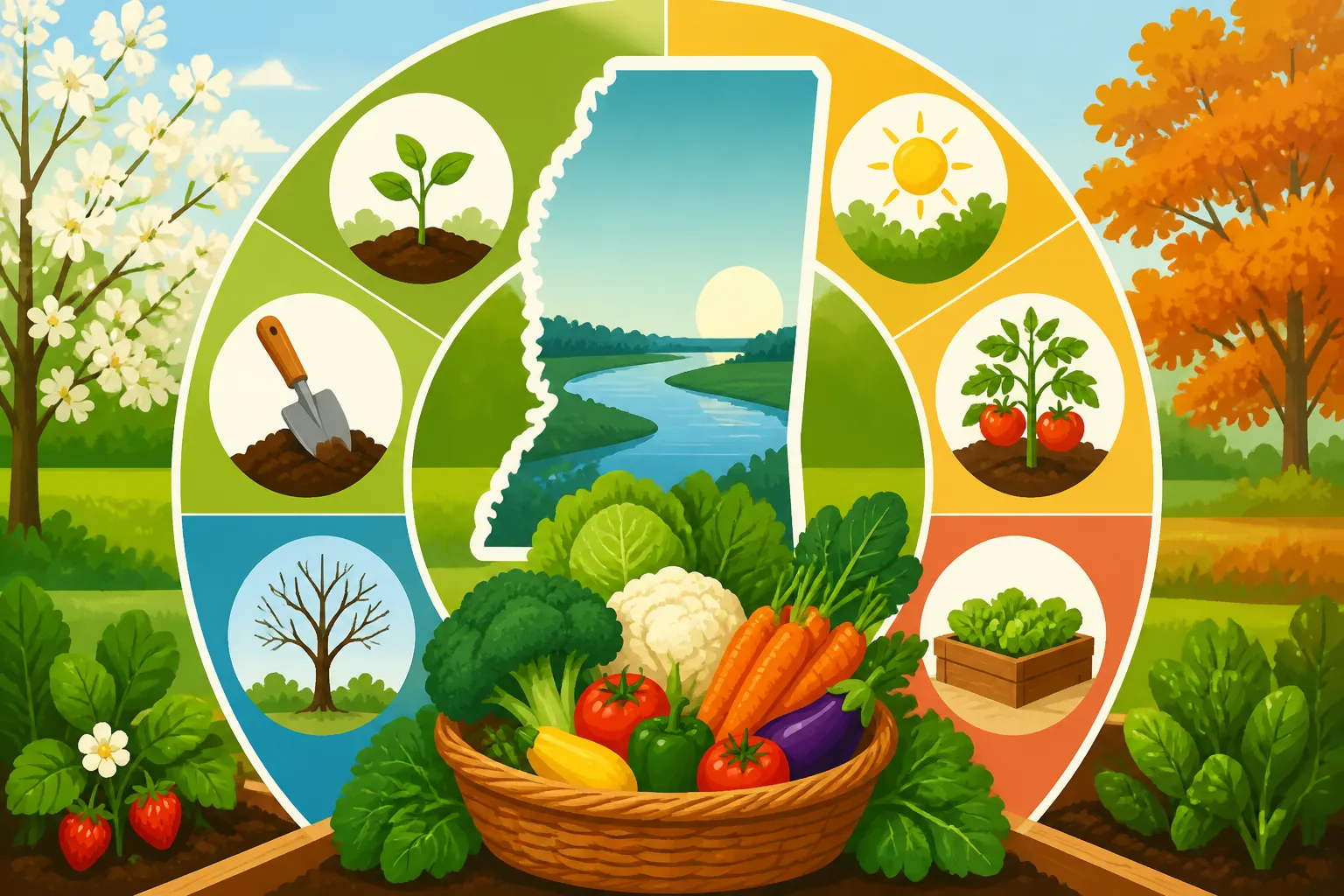
Mississippi Year-Round Vegetable Gardening Calendar by Month
Mississippi gardeners can keep a vegetable bed productive across changing seasons, but a month-by-month schedule is only a starting point. Regional weather, soil warmth, and sudden cold or heat can shift the best time to plant. This calendar explains what to prioritize each month and how to adjust your plans to the conditions in your own garden.
How to use a Mississippi month-by-month calendar
According to Mississippi State University Extension Service, gardeners can grow cool-season and warm-season crops nearly year-round. That does not mean every crop grows well in every month. The practical approach is to match each crop to its preferred conditions, then use the calendar as a prompt to check whether those conditions have arrived.
Mississippi’s growing conditions vary from north to south, and a planting window that works in one part of the state may not suit another. Even within one area, a sheltered bed can warm earlier than an exposed one, while low ground may stay colder or wetter. Use the month-by-month notes below to plan ahead, not as fixed instructions to plant on a particular day.
For specific regional windows, compare this calendar with Mississippi Planting Guide: What to Grow by Season and Zone and Vegetable Planting Windows Across Mississippi’s Five Areas. A hardiness zone can help describe average winter conditions, but it does not tell you when soil is warm enough to sow a particular crop or whether a late cold spell is likely. For more on that distinction, see Mississippi Hardiness Zones: Understanding the 7b to 9a Range.
A useful monthly routine is to:
- Check the short-term forecast before sowing or setting out tender plants.
- Look at soil conditions, not just the air temperature. Cold, wet soil can delay germination and stress seedlings.
- Note what is already growing and how much space it will occupy. A bed that is full now may open up after an earlier crop is harvested.
- Choose crops for the coming conditions. Cool-season vegetables generally fit cooler weather; warm-season vegetables need warmer growing conditions.
- Keep a record of sowing, transplanting, weather, and harvests. Your own notes help you see what worked in your garden and when.
The calendar below uses seasonal guidance rather than exact dates. For crop-specific timing, consult Mississippi Year-Round Vegetable Gardening Calendar by Month alongside the relevant planting-window articles in this garden’s collection.
| Month | Main planning focus | What to consider |
|---|---|---|
| January | Keep cool-season beds productive | Check moisture, drainage, and protection from cold spells |
| February | Prepare for the seasonal transition | Start planning warm-season beds while assessing current conditions |
| March | Shift gradually toward warmer crops | Watch for lingering cold and avoid treating a mild spell as a lasting change |
| April | Build out warm-season planting | Check soil warmth and leave room for successive crops |
| May | Maintain crops as heat builds | Mulch, water consistently, and monitor plants for stress |
| June | Manage summer conditions | Focus on moisture, shade exposure, pests, and crops suited to heat |
| July | Plan fall beds before they are empty | Prepare space and supplies for the next cool-season planting |
| August | Begin the transition to fall crops | Use local planting windows and account for remaining summer heat |
| September | Establish cool-season crops | Keep young plants watered and watch for abrupt weather shifts |
| October | Support fall growth and harvests | Protect tender crops when colder weather threatens |
| November | Harvest and maintain remaining crops | Clear spent plants and keep productive beds in good condition |
| December | Review the garden and plan ahead | Protect what remains and decide what to improve next season |
Mississippi vegetable gardening calendar by month
January
January is a planning month as much as a planting month. In mild spells, an established cool-season bed may continue growing, but cold snaps can slow growth or damage tender foliage. Check the forecast before deciding whether a bed needs protection, and avoid working soil that is saturated or sticky. Walking or digging in very wet ground can compact it and make later bed preparation harder.
Take stock of what remains in the garden. Remove plants that are finished or badly damaged, but keep healthy crops in place if they are still producing. Clear weeds while they are small, and look for standing water or blocked drainage that could create problems during wet weather.
This is also a good time to review last season’s notes. Which crops struggled in heat? Which beds drained poorly? Did seedlings establish well where they were planted, or would a protected starting area help? Answers to those questions can shape the coming season more effectively than a generic calendar.
February
February is a useful month to prepare for change without rushing it. A mild stretch can make the garden feel ready for spring, but temperatures and soil conditions can still swing. Keep cool-season crops in view, and decide which areas will be used for warm-season vegetables once conditions suit them.
Prepare beds when the soil is workable rather than waterlogged. Remove weeds and leftover plant debris, and make sure paths and edges are easy to reach. If you are starting seeds indoors, check the crop’s recommended timing and the expected conditions at transplanting. Starting too early can leave you with plants that outgrow their space before the garden is ready.
Use this month to review seed supplies, containers, supports, and labels. If you plan to grow several crops, sketch where each will go and leave access for watering and harvesting. For guidance on using local planting information to choose dates, see How to Pick Sowing Dates Using Mississippi’s Regional Zones.
March
March often brings a stronger transition toward spring planting, but the shift is not the same in every garden. Warm afternoons do not guarantee that nights or soil have stayed warm enough for tender crops. Continue to check local forecasts, and use the planting needs of each crop rather than a single “spring is here” signal.
Cool-season vegetables may still have a role, especially where they are already growing well. At the same time, gardeners can prepare beds for warm-season crops, add supports, and settle on a planting plan. If you are moving seedlings outdoors, give them time to adjust to outdoor light, wind, and temperature rather than shifting them abruptly from a protected indoor space.
Avoid crowding new plantings into a bed simply because there is room today. Think about the size of mature plants and whether an existing crop will be harvested soon. For the timing and handling of young plants, When to Set Out Spring Transplants Across Mississippi and Moving Seedlings Outside: Watching Regional Last Spring Freezes offer more focused guidance.
April
April is a busy transition month for many gardens. Warm-season crops become a larger part of the plan, but timing still depends on the crop and the conditions in your garden. A warm day is not enough by itself: check whether the soil has warmed and whether the forecast supports planting tender seedlings.
Use the month to establish crops in manageable groups rather than trying to fill every bed at once. Staggering plantings can spread out harvests and reduce the chance that all your produce matures together. Leave space to reach plants for picking and to keep air moving through dense foliage.
Keep existing cool-season crops under observation. Some may continue to produce for a while, while others may begin to struggle as heat increases. Harvest what is ready and plan what will follow in those spaces. For a more focused look at warm-season starts, see What to Plant in April: Warm-Season Starts Across Mississippi.
May
By May, attention shifts from getting crops established to helping them cope with increasing warmth. Check plants regularly for changes in leaf color, wilting, or slowed growth. A plant that wilts during the hottest part of the day may be reacting to heat, but persistent wilting can also signal a water or root problem. Check the soil before deciding what is wrong.
Mulch can help reduce moisture loss and limit weeds, provided it is used appropriately around the crop. Keep watering consistent rather than allowing a bed to dry out severely and then soaking it heavily. Watering at the soil level can help keep foliage drier than overhead watering, which may matter when conditions favor disease.
As you harvest early crops, clear their space promptly if they are no longer productive. Reusing an open bed can keep the garden working, but choose the next crop for the weather it will face rather than planting by habit. If a bed is already exposed to intense sun, think about whether the crop can tolerate that exposure through its growing period.
June
June calls for careful management of heat and moisture. Some warm-season vegetables continue to grow, but high temperatures can make establishment harder for young plants and can interrupt growth in crops that prefer cooler conditions. Check each crop’s needs before deciding whether to keep sowing it, provide protection, or use the space for another purpose.
Water based on the condition of the soil and the plants, not just the calendar. Containers and raised beds may dry faster than in-ground beds, while poorly drained areas may remain wet after rain. If leaves look stressed, check both soil moisture and drainage before adding more water. For more on summer watering, see How Often to Water Garden Beds During Summer Dry Spells.
Keep weeds from competing with vegetables, and harvest produce regularly when it is ready. Remove plants that have finished or are no longer productive so pests and disease have fewer places to linger. Start thinking ahead to fall crops, especially if you want to use beds as soon as summer plantings come out.
July
July is often a demanding month for vegetable beds. Heat, strong sun, and dry spells can put stress on plants, while heavy rain can create a different set of problems in low or poorly drained areas. Check the garden frequently enough to catch wilting, damaged foliage, and standing water before problems become harder to address.
This is also an important planning month for fall gardening. Work out which beds will be available, what needs clearing, and which crops you want to grow as conditions cool. Some fall crops need to be started before a space becomes free, so planning ahead helps avoid missing a useful window. Use crop-specific regional guidance rather than assuming that fall planting begins at the same time everywhere.
If you are starting seedlings for a later planting, give them suitable light and moisture and avoid letting them become crowded or root-bound. Prepare the receiving bed while the seedlings grow. Fall Vegetable Planting: Counting Back to Mississippi Freeze Dates can help with planning backward from the end of a crop’s growing period, while Scheduling Late-Summer Vegetable Starts for an Autumn Mississippi Bed covers the transition into fall beds.
August
August is a bridge between summer management and fall planting. Heat may still be intense, so newly sown seeds and young transplants need attention. Keep the seedbed evenly moist while seeds establish, and protect new plants from avoidable stress where practical. A fall plan works best when it accounts for the weather during establishment, not only the cooler conditions the mature crop may prefer.
Clear spent summer crops as they finish, and prepare open areas for the next planting. Remove plant debris that could harbor pests or disease, then check the bed’s drainage and soil condition. If a crop is still healthy and producing, there is no need to remove it just to follow a calendar; make the change when the bed is ready and the next planting makes sense.
Use local crop windows to decide what to sow or transplant. The timing of fall crops can be especially sensitive to regional differences and the amount of warm weather remaining. For help selecting a crop and timing its start, see When to Plant Cool-Season Vegetables in Mississippi: Spring & Fall and Long-Season Fall Crops: Which Mississippi Veggies Need More Time?.
September
September is a key month for establishing fall vegetables, though the best timing varies across Mississippi and from year to year. Young plants may face lingering heat, while later plantings have less time to establish before cooler weather. Check the expected time to maturity for the crop and compare it with local guidance before sowing or transplanting.
Keep seedbeds and transplants from drying out as they settle in. Watch for pests on tender new growth, and remove weeds that compete with small seedlings. A bed can look crowded quickly once several plantings begin growing, so allow enough room for mature plants and for air to move through the foliage.
If summer crops are still occupying the space you need, decide whether they are worth keeping or whether the fall crop has a better chance in that bed. You can also plan succession sowings to extend the harvest, but each sowing should still fit the local conditions. Fall Vegetable Planting: Counting Back to Mississippi Freeze Dates offers a way to think about crop maturity and the remaining season.
October
October often brings conditions more favorable to many cool-season crops, but weather can still vary. Keep young plantings watered when needed, and do not assume that cooler days mean the soil is always moist. Pay attention after rain as well: beds that stay saturated can stress roots and delay growth.
Harvest crops when they are ready, and remove plants that are diseased or finished. If you want to keep a bed productive, replace spent plants with a crop that suits the remaining growing conditions. Avoid adding new plantings without checking how much time they need and whether the site will remain suitable.
As temperatures begin to fall, follow crop-specific guidance for protection rather than relying on a single rule for every vegetable. Different crops tolerate cool conditions differently, and a cover that works for one situation may not be suitable in another. The article How to Protect Fall Vegetables from Sudden Mississippi Freezes can help you prepare for abrupt cold weather.
November
November is a harvest and maintenance month. Cool-season crops may continue to produce, but growth can slow as temperatures fall. Pick vegetables at the stage recommended for the crop, and remove damaged or rotting produce rather than leaving it in the bed.
Check plant supports, covers, and containers before colder weather arrives. A secure cover is more useful than one that can blow away or rest heavily on tender foliage. Keep an eye on moisture; cool weather can make a bed appear less thirsty, but dry soil can still affect plants.
Use open spaces thoughtfully. Some beds may be better left clear for maintenance or planted with crops that suit the remaining conditions, depending on local guidance. Clear diseased plant material and weeds, but keep healthy crops growing if they are still productive. Make a note of which fall plantings established well and which struggled; this will make next season’s planning more specific.
December
December is a quieter month for many gardens, but there is still useful work to do. Harvest remaining crops as appropriate, check that water drains away from beds, and protect plants when conditions call for it. Avoid disturbing wet soil, and postpone bed work until the ground is in a condition that will not compact easily.
Review the season while details are fresh. Record what you planted, how the crops performed, when they began producing, and where conditions seemed different from the rest of the yard. Note which areas warmed early, where water collected, and where plants were exposed to wind or intense sun. Those observations can help you place crops more effectively next time.
Use the quieter period to plan crop rotation and decide which supplies need replacing. You do not need a complicated chart: a simple record of what occupied each bed can help prevent repeating the same layout without thought. Consult local planting windows before making a final plan, since a calendar is most useful when it is adjusted to local conditions.
Plan by season as well as by month
A monthly calendar is easier to use when you first understand the broad seasonal pattern. Cool-season crops are generally suited to cooler conditions, while warm-season crops need warmer weather. A garden may contain both categories at once during a transition, particularly when one crop is nearing harvest and another is being started.
Cool-season crops
Cool-season vegetables are usually the focus when conditions are mild or cool. Their timing can involve both spring and fall opportunities, but the suitable window depends on the crop and the region. Some crops tolerate cool weather better than others, and young seedlings may need different care from established plants.
When choosing a cool-season crop, consider:
- Whether the bed will be ready during a suitable local planting window.
- How long the crop needs to grow before harvest.
- Whether heat is likely to arrive while the crop is still developing.
- Whether the crop is better started directly in the bed or as a transplant, according to crop-specific advice.
- What will follow it once the bed is cleared.
The calendar should help you notice a coming window, not push you into planting before the soil or weather is suitable. For more on choosing between seasonal crops, see When to Plant Cool-Season Vegetables in Mississippi: Spring & Fall.
Warm-season crops
Warm-season vegetables need conditions that support steady growth. Planting too early can expose seedlings to cold soil or lingering cold weather, while planting late can leave less favorable time for growth and harvest. Use crop-specific recommendations and observe local conditions before setting out tender plants.
Before planting, check whether the bed is ready, whether the soil is warming, and whether the forecast supports establishment. Think ahead about mature plant size, access for harvesting, and how the crop will be watered during hot or dry periods. If you are comparing spring planting options, How to Time Warm-Season Transplants Around Final Spring Cold provides a more focused discussion of transplant timing.
Transition periods
Spring and fall transitions are where a fixed calendar can mislead. A month may be suitable for one crop in one location but too early or too late for another crop elsewhere. Weather can also change quickly, so it is sensible to confirm conditions near the time of planting.
In a transition period, plant in stages when that suits the crop. This can reduce the risk of putting every seedling or seed into a bed just before an unfavorable spell. It also spreads the work of transplanting and harvesting. If you are unsure whether to plant now, compare local guidance, soil conditions, the forecast, and the crop’s needs rather than relying on the month alone.
Set up beds for a longer harvest
A year-round approach is not simply about planting more often. It depends on keeping beds ready for the next crop, avoiding preventable soil problems, and choosing a manageable pace. A few practical habits can make a seasonal calendar more useful.
Leave room for the next crop
Before planting, consider what is already in the bed and when it may finish. Avoid placing a new crop where it will be shaded or crowded by a larger plant. If you expect to reuse the space, decide what will follow the current crop before harvest time. That way, you can prepare the bed without leaving it empty longer than necessary.
Succession planting can help maintain a steady supply, but it is not a requirement for every garden. Planting smaller groups at intervals may be more manageable than sowing a large area all at once. The best approach depends on how much produce you use, how much space you have, and whether you can keep up with watering and harvesting.
Pay attention to soil and drainage
Healthy soil supports more reliable growth, but improvements should respond to the bed’s actual condition. Soil that stays wet needs attention to drainage; soil that dries quickly may need better moisture management. Avoid working soil when it is saturated, since compaction can make beds harder to manage later.
A soil test can help identify concerns before you add amendments. Do not assume that every garden needs the same treatment. For practical preparation steps, see Preparing Mississippi Garden Soil: Tests, Compost, and Care. If you garden in raised beds or challenging ground, Raised Beds vs In-Ground Plots for Poor Mississippi Soils can help you compare the trade-offs.
Keep watering practical
Water needs change as plants grow and as weather shifts. Newly sown beds and young transplants need close attention while they establish, while established plants may use water differently depending on their size, the soil, and the conditions. Check the soil before watering and look for signs of both dry soil and poor drainage.
The aim is not to keep every bed constantly wet. Too much water can be as unhelpful as too little, especially where drainage is slow. If you use containers, remember that their growing medium can dry out differently from garden soil. For broader water-saving ideas, see Water-Saving Garden Strategies During Mississippi Droughts.
Use protection with a purpose
Temporary covers can help shield vulnerable plants from a sudden change in weather, but they need to be appropriate for the crop and conditions. Secure covers so they stay in place, and check that plants are not being damaged by the material. Remove or adjust protection when conditions change, following crop-specific advice.
Protection does not replace good timing. A tender crop planted into conditions it cannot tolerate may remain stressed even if it receives temporary cover. Use protection as a backup for weather changes, not as a reason to ignore the planting window.
Adjust the calendar to your garden
Two gardens in the same part of Mississippi can behave differently. Sun exposure, wind, slope, drainage, nearby structures, and the condition of the soil all affect how quickly a bed warms or dries. Your own observations are therefore a useful complement to regional planting advice.
Watch soil conditions, not just the date
A calendar date does not tell you whether the soil is workable, warm enough for a crop, or too wet to prepare. Before sowing, check the soil in the bed itself. If it is cold and wet, seeds may be slow to establish; if it is dry, newly sown seeds may not germinate evenly without careful moisture management.
Soil warmth matters particularly when moving toward warm-season planting. For a focused explanation, see Soil Temperatures for Germinating Mississippi Vegetable Seeds. Use the crop’s specific guidance rather than applying one soil condition to every vegetable.
Notice microclimates
A sheltered bed near a structure may experience different conditions from an open bed, while a low spot can hold water or cold air. A sunny site may warm quickly but also dry out faster. These differences can shift the practical timing of planting and the level of care plants need.
Keep simple notes about where crops grow well. If one part of the garden consistently dries out, place crops that need more frequent attention where you can reach them easily. If another part stays wet after rain, avoid treating it as interchangeable with a well-drained bed. Small site differences are worth considering before you choose crops or dates.
Respond to weather swings
A warm spell can be followed by a cold snap, and a stretch of dry weather can be interrupted by heavy rain. Build some flexibility into the plan. Keep supplies for routine protection accessible, avoid planting every seedling at once when conditions are uncertain, and be prepared to delay a task if the bed is not ready.
When deciding whether to plant, ask whether the crop can handle the conditions expected during establishment. If not, waiting may be better than trying to compensate afterward. For spring planting decisions, Mississippi Frost-Date Gardening: Timing Cool vs. Warm Crops and Mississippi Freeze Dates: Planning Around Local Spring Frost provide additional context on planning around cold risk.
Common calendar mistakes and better alternatives
A calendar is most helpful when it prevents avoidable mistakes. These are common ways gardeners can get off track, along with a more useful response.
- Planting because the month says to. Treat the month as a reminder to check conditions. Use local crop guidance, soil readiness, and the forecast before planting.
- Treating one warm afternoon as a lasting change. Check upcoming conditions and consider the needs of the crop, particularly for tender plants.
- Starting too many crops at once. Grow an amount you can water, monitor, and harvest. Smaller staged plantings can be easier to manage.
- Ignoring the crop that is already in the bed. Plan the next planting around the current crop’s likely finish and the space it will need.
- Working wet ground. Wait until the soil is workable to avoid compacting it and making bed preparation more difficult.
- Assuming more water is always the answer. Check soil moisture and drainage before watering a stressed plant.
- Leaving finished plants in place indefinitely. Clear spent or unhealthy plants so the space can be prepared for what comes next.
- Using one schedule for the whole state. Compare broad seasonal advice with regional planting windows and your own garden observations.
A steady garden does not need to look full in every month. Some beds may be resting or being prepared while others are producing. The goal is to make intentional transitions, not to force a crop into unsuitable conditions.
Frequently Asked Questions
Can vegetables grow in Mississippi throughout the year?
Gardeners can plan for crops across changing seasons, but not every crop suits every month. Choose between cool-season and warm-season crops based on local weather, soil conditions, and crop-specific planting guidance.
Should I plant on the same schedule everywhere in Mississippi?
No. Regional conditions and individual garden sites differ. Use regional planting windows as a starting point, then check the soil and forecast where you garden.
What should I do if the calendar and the weather disagree?
Give priority to the crop’s needs and the conditions in your bed. Delay planting if the soil is not ready or the forecast is unsuitable, and use local guidance to reassess the window.
How can I keep the garden productive between seasons?
Plan what will follow the current crop, clear beds as plants finish, and use staged plantings when they fit your space and routine. Keep records so future plans reflect what worked in your garden.
Sources
- Mississippi State University Extension Service — Mississippi Vegetable Gardener's Guide | Mississippi State University Extension Service (checked November 15, 2026)
Disclaimer
This article is for general informational purposes only and does not constitute professional advice. Laws, prices and regulations vary by location and change over time. Consult a qualified professional for guidance on your specific situation. Mississippi Gardening Guide is not a government agency and is not affiliated with any university extension, state department of agriculture or other government agency.